
Basement Flooding in Denver: Sump Pump & Backwater Valve Guide...
Read More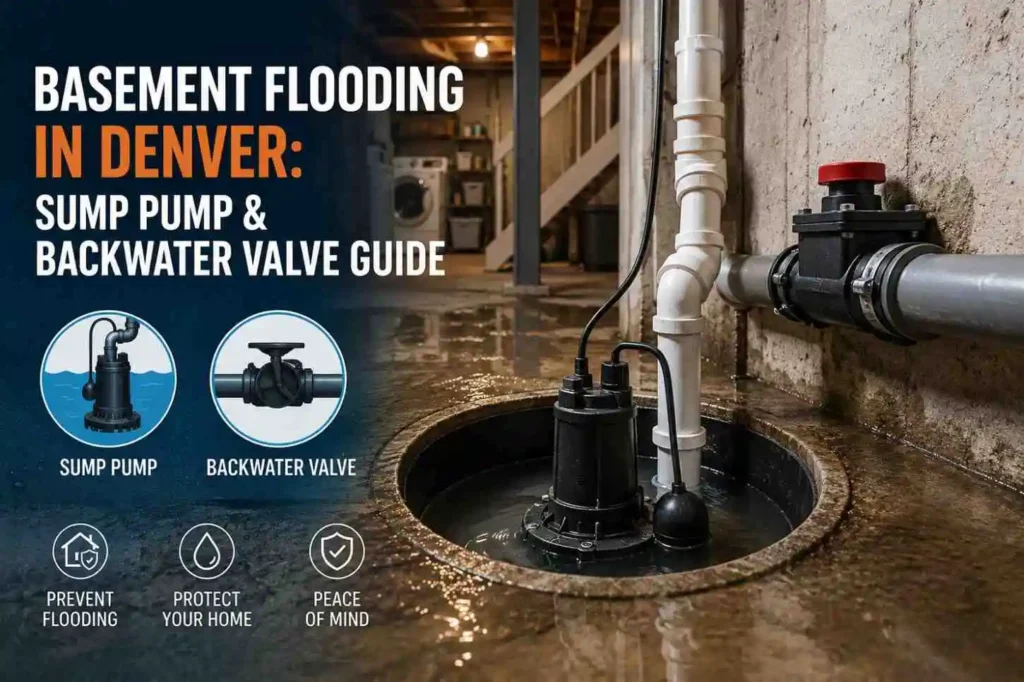
A finished basement adds great value to a Denver home, but it also brings a big worry: the sudden, costly mess of water damage. Sadly, many homeowners only ask, “Why is my basement flooding?” after the damage is already done. Between heavy spring melting snow and big summer rains, our local homes face unique water risks. Finding out that your sump pump is not working during a storm is a problem no one wants to face. Luckily, you can protect your home. Here is your simple guide to the two best ways to defend your house: the sump pump and the backup valve.
Some Denver neighborhoods, especially places near the South Platte River or low parts of town, naturally have high underground water levels. When this water rises, it pushes very hard against the base of your house. This hard push forces water through tiny cracks in the concrete, turning your basement floor into a wet, damaged space.
The mix of frozen ground and sudden warm weather makes water collect around the base of your house instead of soaking into the dirt. In Denver, heavy summer rains or fast-melting spring snow fill the ground too quickly. This extra water builds up fast against your basement walls and finds any small opening to leak straight inside.
When city drains overflow during big storms, dirty water can turn around and push straight back into houses. Without the right protection, this very dirty mix of rainwater and sewage forces its way up through your basement floor drains, toilets, and sinks. This causes huge, dangerous damage to your nice living space.
Dirt that slopes toward your house instead of away from it sends rainwater straight into your basement walls. When your yard does not slope the right way, it acts like a funnel for the rain. Instead of sending water safely away into the yard, your ground guides every drop of rain straight toward your home’s weak underground walls.
A small pump put in a pit in the lowest part of your basement collects rising groundwater and pumps it safely away from your home’s base. As the pit fills, a floating switch turns the pump on. Water is then sent through a special pipe, safely exiting outside where it cannot hurt your house.
Yes, if your home often gets wet, sits in a low part of Denver, or if you are fixing up your basement with expensive floors and walls. Protecting these big investments takes a good plan. If you do not put in this system, your beautiful new rooms are in great danger from sudden changes in underground water levels.
Common ways pumps stop working include stuck switches, dirty screens that block water, and the most common problem—losing electricity during a big local storm. When a heavy rain hits, power lines often go down. Without electricity, a normal pump stops working right away, leaving your basement with no defense against fast-rising floodwaters.
Adding a strong battery backup system keeps your home safe even during total power outages. This second power source turns on by itself the moment your main electricity stops working. By keeping the pump running when the main power goes out, a backup system gives you great peace of mind during the worst Colorado storms.
A one-way valve put on your main sewer pipe lets dirty water leave your house but automatically stops city sewage from backing up into your basement. A small door opens easily when you flush or drain water, then closes tightly if public sewer lines start flowing back toward your home.
Older neighborhoods with old sewer systems or places with a lot of new people put extra stress on city pipes during heavy rains. When big storms overload these old systems, the city lines back up. Without a valve, that dirty sewage water has nowhere to go but up into your home’s lowest drains.
A professional backwater valve installation in Denver requires careful execution, including the necessity of pulling local building permits and cutting into the main line safely. Expert plumbers excavate a precise section of your basement floor, install the heavy-duty valve directly into your main sewer pipe, and restore the concrete seamlessly.
Test your sump pump two times every year to keep your basement safe. You can do this easily by pouring a big bucket of water into the pit to make sure it turns on. Taking regular care of your pump is the best way to stop bad flooding during sudden, heavy rainstorms. Always check the floating switch to see if it moves. Cleaning out small dirt from the pit ensures the motor starts exactly when you need it most.
Keep downspouts extended at least 3 to 5 feet away from the home’s foundation walls. Clogged gutters force overflowing rainwater to dump directly next to your underground structure. By clearing autumn leaves and adding functional extensions, you direct roof runoff safely toward the yard, mitigating a leading cause of basement flooding that Denver properties experience.
Make sure the backup valve cap is clean so the inside flap can move easily. Over time, home waste or small rocks can collect inside the valve box. Opening the cap now and then to clean out these blocks ensures the gate will close tightly if city sewer water ever starts to back up.
Set up a yearly plumbing check before the heavy spring melting hits the Front Range. Hiring a local expert ensures your whole underground water safety system works perfectly. A plumber can check pump health, test backup batteries, clear hidden main sewer line blocks, and make sure your home stays fully ready for Colorado’s sudden, heavy seasonal rain storms.
Protecting your Denver home from bad water damage takes a good plan, not just luck. As we saw, using a basic setup leaves your house in danger from Colorado’s heavy rains and fast-melting snow. By putting a reliable sump pump system together with a strong backup valve, you safely block the two main ways that unwanted water and city sewage get in. Do not wait for a big storm to show you a hidden problem with your system. Use our easy care checklist today, set up an expert plumber checkup, and get the great peace of mind that comes with a totally dry, safe basement.
High water levels and fast-melting snow can flood your Denver basement with no warning. Protect your home right now by switching to a reliable sump pump and backup valve system. Call our emergency plumber team today to get your complete, expert checkup before the next big rainstorm comes.
Related Blogs
Basement Flooding in Denver: Sump Pump & Backwater Valve Guide
Basement Flooding in Denver: Sump Pump & Backwater Valve Guide...
Read MoreWhat is Hydro Jetting and Why is it the Best Drain Cleaning Solution in Denver?
What is Hydro Jetting and Why is it the Best...
Read MoreCommercial Plumbing Maintenance Checklist for Denver Businesses (Restaurants, Offices & More)
Commercial Plumbing Maintenance Checklist for Denver Businesses (Restaurants, Offices &...
Read More