

Whole House Water Filtration Systems in Denver: Do You Need...
Read More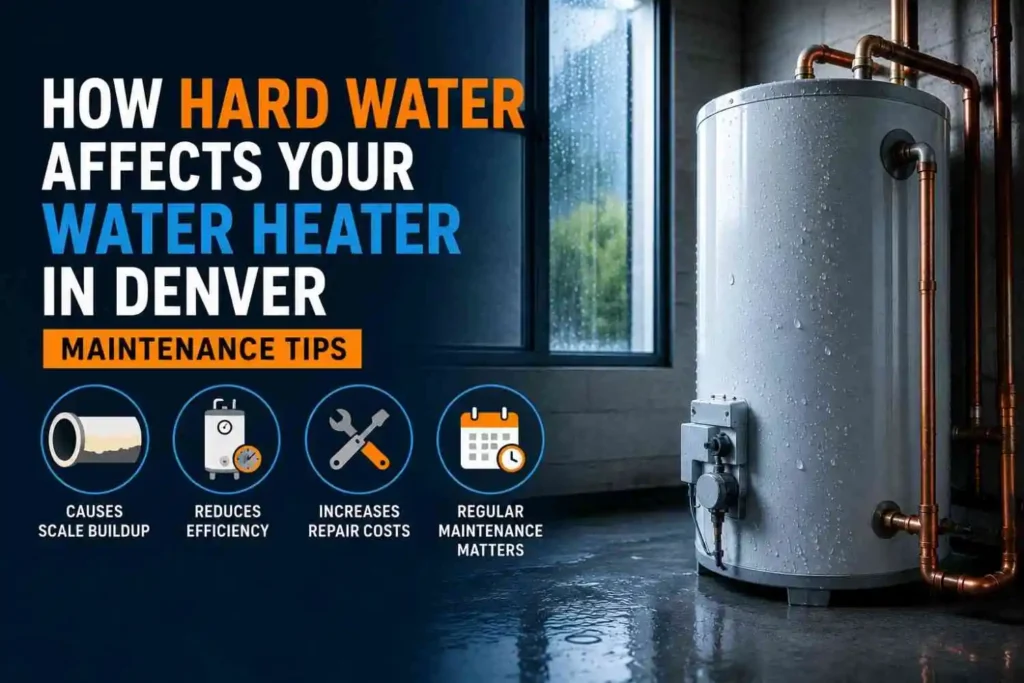
Denver’s beautiful mountain water has a hidden problem. As melted snow flows through our rocky ground, it picks up a lot of minerals like calcium and magnesium. This clean water is completely safe and great to drink, but it slowly damages your home’s pipes, the same reason drain cleaning for Denver homes. Regular water heaters and tankless systems in Colorado have a much harder fight against mineral buildup than in other places, which causes them to lose power and break down early.
In this guide, we’ll look at exactly how hard water heater Denver problems put your machine’s life at risk and give you the important care tips you need to save your money.
When hard water goes into your water heater, the heat changes it. Heating the water makes the hidden calcium and magnesium separate from the liquid and turn into solid crystals. These tiny mineral pieces quickly sink to the bottom. They stick to the hottest parts inside your machine and start a bad cycle of building up thick, hard layer after layer.
Over time, these falling crystals pile up into a thick, rocky layer of stone at the bottom of your system. This sediment buildup in water heaters in Denver creates a real wall between the fire and the water. Your system must work twice as hard to heat through this heavy mineral blanket, which causes overheating, loud popping sounds, and a broken tank in the end.
Tankless systems are also hurt by Colorado’s tough mineral water. The tankless water heater hard water Denver problem is different because the minerals do not pile up at the bottom of a big tank. Instead, the hard buildup quickly clogs the narrow, tight tubes inside the copper heating part. This stops the necessary water flow, makes the heating part way too hot, and causes the system to shut down suddenly from too much heat stress.
Popping, knocking, or deep rumbling sounds mean your water heater needs help. Water gets trapped under the heavy layer of minerals at the bottom and boils. This creates steam bubbles that burst loudly through the hard mineral layer. These noises and shaking mean that parts of your water heater are getting way too hot, which can be dangerous.
The mineral layer acts like a thick blanket that stops the heat from reaching the water. Because the heater must push warmth through a heavy layer of stone, your system has to work twice as hard. This uses up a lot of extra power and makes your monthly bills go way up.
If you suddenly run out of hot water fast, it means your heater cannot keep up. When mineral buildup covers the parts that heat the water, the machine cannot do its job well. This leaves you with less hot water and annoying changes in temperature that you do not expect.
Taking care of your machine before it breaks is always cheaper than dealing with an emergency breakdown. To keep your system working well, you should treat water heater maintenance in Denver as an important yearly task that must be done, not an optional weekend chore. Steadily booking a professional cleaning or doing a deep system wash stops minerals from hardening into solid stone, ensuring your home never loses reliable hot water.
Spending a little bit of time and effort on your machine saves you a lot of money in the future. Simple steps like washing out the tank, changing the protection rod, and checking the safety valve will greatly extend water heater life Denver homeowners rely on. By keeping the inside parts completely free of harmful mineral buildup, you protect your system from breaking early and save thousands of dollars on expensive replacement costs.
While people in some places can skip a year of taking care of their machines, Colorado’s special land means you must follow a tighter plan. The high amount of minerals found all over the Front Range means you must clean your system every 12 months to keep the buildup away. Letting a machine run for more than a year without washing it out gives the tough calcium enough time to bake onto the heating parts, which causes damage that cannot be fixed.
Just draining and filling your water heater at home only removes loose, floating dirt. It leaves the heaviest mineral layers behind. Professional cleaning goes deeper by using high water pressure to wash away the hard buildup stuck to the tank walls. Without special high-pressure tools to break apart these stubborn, baked-on mineral layers, the thick heat barrier stays inside, risking early system failure.
Professional cleaning follows a careful step-by-step safety plan. Workers start by turning off the whole system to safely cut the power. After connecting hoses that can handle hot water, they shake up and wash out the hard minerals from the tank. For tankless systems, they use special chemicals to clean out the tight, narrow paths inside the heating parts.
The dirty water that comes out shows clear proof of the hidden mess inside your tank. Instead of being clear, the first water looks very cloudy and is full of large, white pieces of hard calcium. Seeing these rocky pieces fill the drain hose proves how hard your system had to fight against heavy minerals. This looks completely different from the clean water that flows out at the very end.
Trying to do this big job by yourself can cause big problems that can quickly ruin your weekend. Homeowners face the danger of dealing with burning hot water, breaking weak safety valves, or damaging soft plastic drain parts. A single mistake during a home cleaning can easily flood your basement, cause bad skin burns, or completely ruin your machine so you have to pay for an expensive new one right away.
Hiring an expert water heater service in Denver brings great skills and advanced tools to your home. More than just a basic wash, an experienced worker does a deep check of the whole system. They test important safety valves, check the protection rod, and use special, safe liquids to clean out the minerals. This full cleaning makes sure every bit of tough, baked-on mineral stone is safely dissolved and washed away.
Paying a certified worker ensures your valuable factory warranty stays completely valid and protected by law. Many big heater brands strictly require proof of professional care to replace broken parts if the system fails early. By keeping your official service receipts on file, you can feel completely relaxed knowing you are covered if the machine breaks down unexpectedly in the future.
Ignoring Denver’s heavy mineral water turns a small cleaning job into an expensive emergency breakdown. From fast-rising energy bills to bad heat damage, mineral buildup quietly cuts your machine’s life short every single day. Luckily, setting up a steady 12-month washing plan completely fixes this problem. It brings back high power and saves your home from early replacement costs. While a quick do-it-yourself rinse leaves hard scale behind, trusting certified local experts keeps your pipes completely safe, working well, and fully covered by your warranty. Do not wait for loud popping sounds to do something; book your professional system cleaning today.
Do not let tough mineral buildup destroy your water heater from the inside out. Call the team at Prime Peak Plumbing today to book your full yearly system cleaning. We will bring back your machine’s energy power and make sure you have reliable hot water all year long.
Related Blogs
Whole House Water Filtration Systems in Denver: Do You Need One for Hard Water?
Whole House Water Filtration Systems in Denver: Do You Need...
Read MoreBasement Flooding in Denver: Sump Pump & Backwater Valve Guide
Basement Flooding in Denver: Sump Pump & Backwater Valve Guide...
Read MoreTree Roots in Sewer Line in Denver: What Are the Signs & How Do You Fix Them?
Tree Roots in Sewer Line in Denver: What Are the...
Read More