

Why Drain Cleaning is Essential for Denver Homes – Hard...
Read More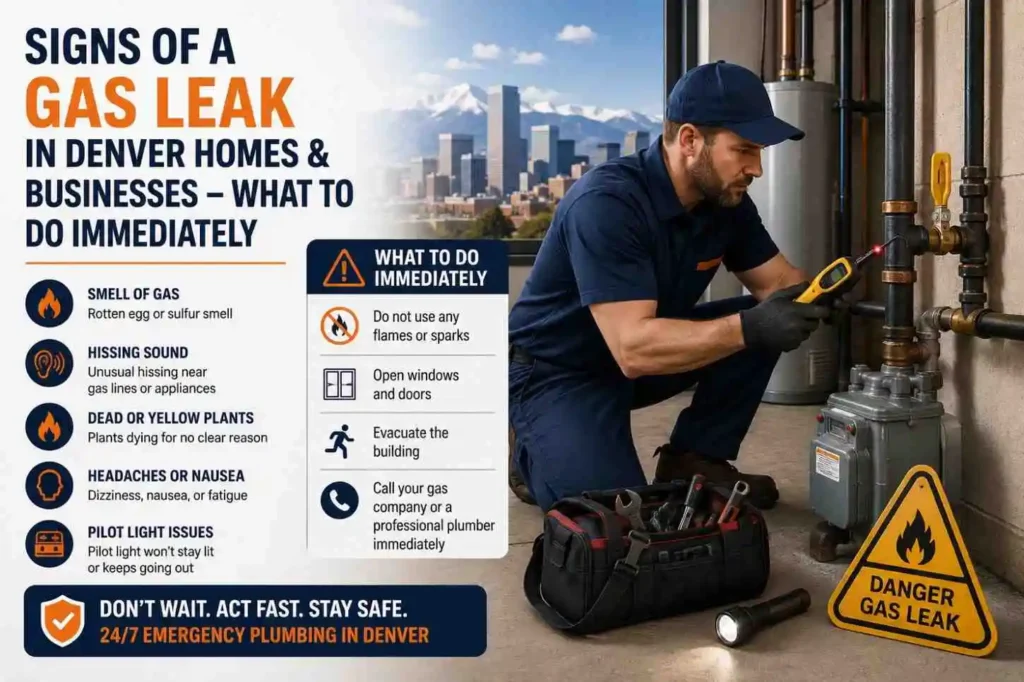
A normal day in a busy Denver office or a quiet local home can change fast if a strange smell fills the room. Denver’s weather changes a lot, with freezing winters that make heaters work hard and quick shifts in seasons, so our gas lines and appliances always work extra hours. While gas problems are rare, knowing the signs of a gas leak in a Denver building is very important for your safety. Finding these small signs, things you can see, hear, or smell, is not just a random fact; it is the best way to protect your family, workers, and property from danger.
Natural gas has no color and no smell at all, which makes it very dangerous by itself. To keep you safe, gas companies add a safe chemical called mercaptan to it. This chemical gives the gas a very strong, bad smell that is like rotten eggs. If you ever notice this bad smell in your home, you must take it seriously.
Never rely on your nose alone when evaluating your property. A damaged pipe or a failing appliance connection can create distinct auditory warning signs. Keep an ear out for any unusual hissing, whistling, or roaring noises coming from your utility lines, water heater, or furnace. These sounds indicate pressurized gas escaping, pointing directly to severe natural gas leak symptoms that Colorado residents must never ignore.
Your eyes can see physical changes that your nose or ears might miss. Inside, watch your plants closely; a slow leak can stop roots from breathing, causing healthy houseplants to dry up and die for no clear reason. Outside, look for a strange patch of dead, brown grass in a green lawn, or unexpected bubbles in mud and puddles.
When gas fills a closed room, it quickly takes away the oxygen you need to breathe. This drop in oxygen can cause sudden, strange health problems for anyone inside. People might suddenly get bad headaches, feel dizzy, feel sick to their stomachs, feel very tired, or have trouble breathing. If many people in the building feel these things at the exact same time, leave right away.
Our furry pets can often warn us about dangers in the air before we notice them. Because pets are smaller and breathe faster than we do, they get sick from bad air much quicker than humans. You might notice your dog or cat suddenly looking very upset, confused, or very tired long before any person in the room feels sick.
Large warehouses and business buildings have special problems because their very high ceilings and big fans can easily mix or hide leaking gas. This mixing makes finding the leak by yourself very hard until the problem gets bad. Using special business gas leak detection, Denver keeps a constant, automatic watch over big buildings and shared properties before dangerous amounts of gas can build up.
When you think there is a gas leak, your most important job is to get out fast. Do not stop for even a second to grab your things, look for the leak, or open windows to let air in. Get every single person and pet out of the building right away. Minutes matter, and knowing what to do in a gas leak in Denver starts with leaving the building completely behind.
Just one tiny spark can make a room full of gas blow up instantly. As you walk out, do not touch anything that uses electricity. Do not turn light switches on or off, do not unplug any machines, do not use the garage door opener, and do not use a house phone inside. Any small spark from these normal actions can cause a terrible explosion.
To be truly safe, you must move far away from the danger. Once you are completely outside and down the block, it is finally safe to use your cell phone. Call 911 or the Xcel Energy emergency gas line right away to report the problem. Stay at this safe distance until emergency workers arrive, check the building, and tell you it is officially safe to go back inside.
Normal carbon monoxide alarms only detect the bad air that comes after a fire or gas has burned. This means they cannot see raw, unburned gas filling up your rooms. To catch a live gas leak before a spark hits it, every Denver building needs special gas detectors. These specific safety tools constantly check the air for gas particles, and they will sound an alarm long before the gas can cause an explosion.
Stopping a sudden gas emergency requires constant care. Yearly gas line inspection and repair in Denver by a professional is very important, especially for old gas pipes, historic Denver brick homes with shifting floors, and busy commercial heating systems built in moving dirt. Regular pipe and machine checks let workers find hidden tiny cracks, loose pipe connections, and worn-out machines early. This lets them fix small problems long before they turn into a truly dangerous hazard.
When it comes to keeping people safe, never doubt your feelings or wait to take action. If you even think you smell, hear, or see signs of a gas leak, act like it is real right away. Choosing to be completely safe is always the smartest choice you can make. It is much better to have a small false alarm than a sudden, terrible accident.
To stay totally safe from a bad gas leak in your Denver home or shop, you only need to look at two main things. These two things are regular pipe checks and quick action. First, you must get yearly checks from an expert worker. You must also put special gas alarms in your house. Doing these things makes a great safety plan that keeps your building safe all year long.
Second, if your alarms or your own body ever tell you there is a leak, remember the main rule. You should not wait for anything. Trust your gut, do not flip switches to stop sparks, and make everyone leave the building fast. In a big emergency, running out right away is always your best choice.
Do not wait for a dangerous emergency to find a hidden gas problem. Our expert local plumber in Denver offers full testing and pipe checks across the Denver area. Protect your property, workers, and family by scheduling a precise safety check with our licensed local workers right now.
Related Blogs
Why Drain Cleaning is Essential for Denver Homes – Hard Water & Tree Roots
Why Drain Cleaning is Essential for Denver Homes – Hard...
Read MoreWhole House Water Filtration Systems in Denver: Do You Need One for Hard Water?
Whole House Water Filtration Systems in Denver: Do You Need...
Read MoreHow Often Should You Get Drain Cleaning in Denver? Maintenance Schedule
How Often Should You Get Drain Cleaning in Denver? Maintenance...
Read More