

Commercial Plumbing Maintenance Checklist for Denver Businesses (Restaurants, Offices &...
Read More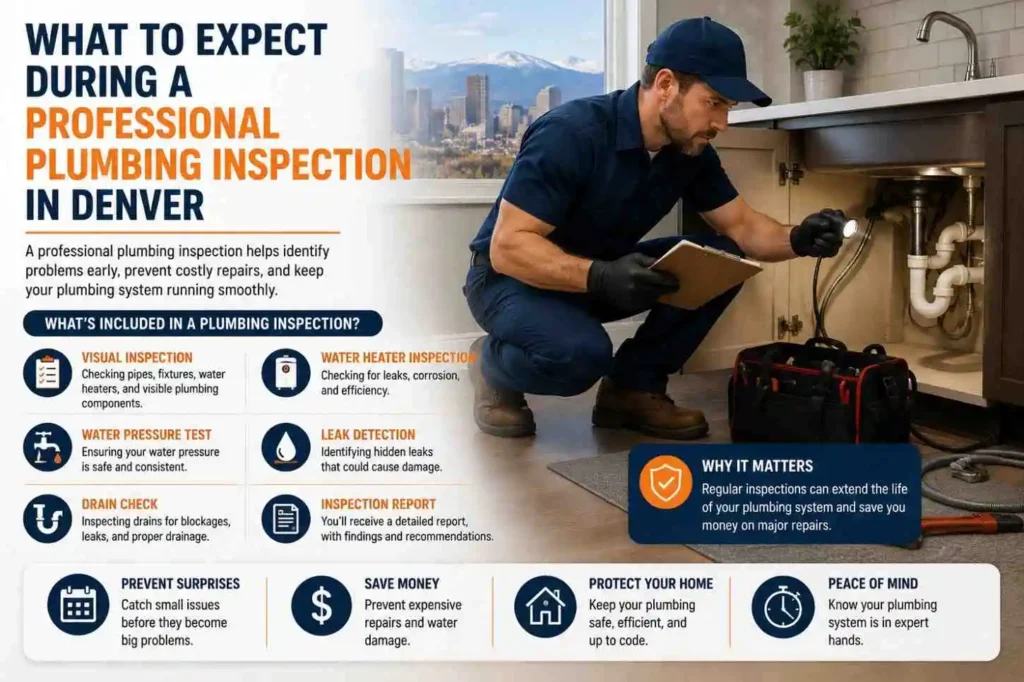
Buying a new house in Denver, or just trying to stop a sudden, expensive midnight leak with professional leak detection in Denver? A professional home plumbing inspection in Denver is the best way to get peace of mind. Still, many homeowners wait to book a visit because they do not know what really happens or worry it will disrupt their day. There is no need to worry. This guide explains exactly what to expect during a professional plumbing check in Denver so you can feel completely ready, protect your money, and keep your pipes working perfectly.
The infrastructure of your home undergoes immense stress due to Denver’s intense weather shifts. So if your plumbing isn’t properly insulated, then freezing winter temperatures can easily become the cause of frozen or burst pipes. Your main water and sewer lines experience immense pressure due to this shifting ground. This becomes the cause of hidden cracks or sudden breaks. To identify these climate-specific vulnerabilities, a specialized inspection is required. This should be done s before the next major freeze or seasonal ground shift causes a disaster.
Plumbing problems are very different depending on your neighborhood. If you live in an old area like Capitol Hill or the Highlands, your home might still have old, weak pipes made of clay or steel. These old pipes easily rust and get damaged by tree roots. On the other hand, newer homes often have different problems, like bad installation, too much water pressure, or cheap materials that break early. A professional inspector knows these local differences well. They know exactly where to look for problems, whether your home is a historic building or a brand-new house.
A professional inspection gives you more than just a report, it gives you real peace of mind. You find out exactly what condition your pipes are in before a small issue turns into a flooded basement. For home buyers, it means no nasty surprises after closing. For current owners, it protects your property value, lowers the chance of emergency repairs, and often helps with insurance claims. In short, a small inspection fee today saves you from huge repair bills tomorrow.
The plumber starts by locating your main water shut-off valve and testing that it actually works. This is the one valve that stops all water to your home in an emergency, so it must turn smoothly and seal completely. Over the years, these valves can rust, stick, or leak, especially in older Denver homes. The inspector also makes sure you know exactly where it is, so you can act fast if a pipe ever bursts.
A professional home plumbing inspection in Denver often includes running a high-resolution camera deep into the main sewer line. This specialized scope looks for tree root intrusion, which is common in older neighborhoods, as well as pipe bellies (sagging sections that collect debris and cause nasty backups). Detecting these hidden underground structural issues early prevents expensive sewer backups that require digging up your beautiful yard later on.
Next, the plumber checks all your outdoor fixtures — hose bibs, spigots, and sprinkler connections. In Denver’s freezing winters, outdoor taps are the first to crack if they are not frost-proof or properly drained. The inspector looks for leaks, weak water pressure, and missing backflow preventers that could let dirty water flow back into your clean supply. Catching these early stops burst pipes and water waste once the cold hits.
Inside, the bathroom gets a close look because it has the most fixtures. The plumber checks toilets for silent leaks and running water, tests sink and tub drainage speed, and inspects under every vanity for hidden moisture. They also check the water pressure at each faucet and shower head. Slow drains or a constantly running toilet often point to bigger problems building up further down the line.
The kitchen and utility areas hide some of the most common leaks. The plumber inspects the kitchen sink, checks the garbage disposal in Denver for jams or leaks, and tests the dishwasher and washing machine hose connections. Loose or worn hookups in these rooms are a leading cause of sudden water damage. A quick check here makes sure everything drains fast and stays leak-free.
A straightforward answer to the big question: What does a plumber check Denver homeowners need to know. The inspection summarizes four main pillars: water pressure levels to protect appliances, overall drainage speed, visible pipe corrosion, and structural leaks. This quick overview gives you total clarity on your home’s health, ensuring no hidden plumbing issues are left behind to compromise your comfort or your property value.
Your water heater is very important for a comfortable home.
The plumber will check the tank for dirt buildup. This dirt can make the heater get too hot and use too much energy. They will also test the safety valve to make sure it works right. Finally, they will look for rust or small cracks at the bottom.
Finding these problems early helps you get a new heater before it breaks. This stops you from having a freezing shower or a flooded room.
A good sump pump is very important to keep water out of your basement.
During the check, the worker tests the pump. They also clean out any dirt from the pit so it runs perfectly. This check is very important to stop your basement from flooding during heavy rain or melting snow.
Checking that the pump switch moves easily and the backup power works right gives you peace of mind when a big storm hits your town.
Once every area is checked, the plumber sits down with you to walk through the findings. Instead of just handing over a list, a good inspector explains what each issue means in plain language and shows you photos or camera footage where needed. You leave the visit with a clear, written report of your home’s plumbing health, no guessing, no confusion. This wrap-up is where you finally see the full picture and know your next steps.
A professional helps you understand the results. They show you what you must fix right away for safety and what is just a small problem. They will point out big trouble like an active leak or a broken safety valve that needs a quick fix. They will also give you a simple plan so you can save money for smaller repairs later.
Booking a plumbing check is a smart way to protect your house. It finds hidden pipe problems, checks your big appliances, and stops costly guessing. With a clear report, you can easily fix the big problems first, make your house worth more, and avoid crazy pipe emergencies at midnight. Do not waste the time and let a small leak become an expensive disaster. Schedule your inspection right now and enjoy the comfort of functional and efficient pipes all year round
Never allow a secret leak to become a cause of disturbance for you. Secure your home and family from bad weather and old pipes by scheduling your plumbing inspection right now. Our emergency plumber in Denver is ready to protect your peace of mind.
Related Blogs
Commercial Plumbing Maintenance Checklist for Denver Businesses (Restaurants, Offices & More)
Commercial Plumbing Maintenance Checklist for Denver Businesses (Restaurants, Offices &...
Read MoreWhole House Water Filtration Systems in Denver: Do You Need One for Hard Water?
Whole House Water Filtration Systems in Denver: Do You Need...
Read MoreTree Roots in Sewer Line in Denver: What Are the Signs & How Do You Fix Them?
Tree Roots in Sewer Line in Denver: What Are the...
Read More